
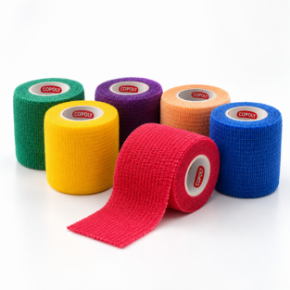
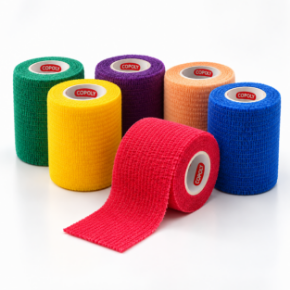
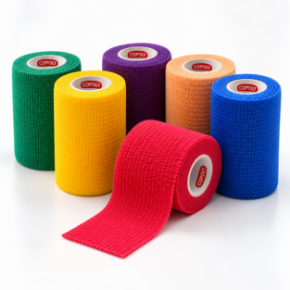
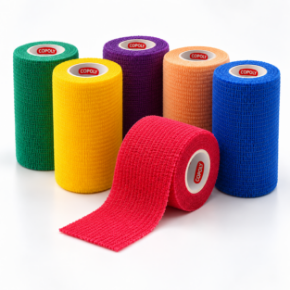
- Copoly Self-Adhesive Elastic Bandages for Sport
- Kinesiology Tapes
- Sports adhesive tapes – sports plaster and sports tape
-
Sports nutrition supplements
- Massage creams and oils
-
Sports recovery
-
Equipment
- Medical bags and first aid kits
- Training Accessories
-
Fitness Equipment and Accessories
- Reaction and coordination training
- Coolers and insulated drink dispensers
- Aluminium transport boxes
- Goals, nets and accessories
- Home
- Manufacturers
- Contact
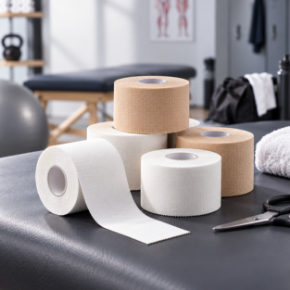
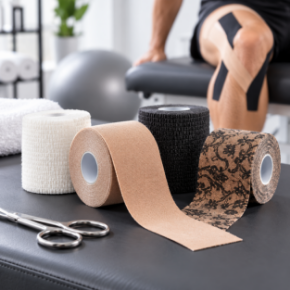
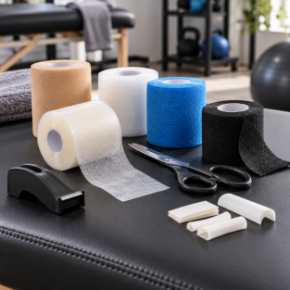
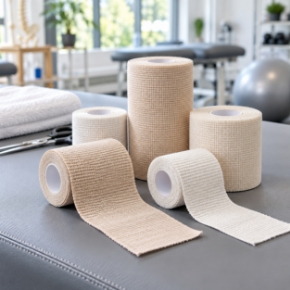

















































Kinesiology Tapes
Kinesiology tapes, also known as kinesio tape or elastic taping tape, are flexible adhesive textile tapes designed to be applied directly to the skin while allowing normal movement. They are widely used in sport, physiotherapy and rehabilitation settings where mobility needs to be preserved. Choosing the right tape is less about colour and more about material, adhesive strength, resistance to moisture, roll size and skin tolerance.
In this category you can compare kinesiology tape for individual users, athletes, coaches, physiotherapists, clinics and teams. The range includes cotton-based elastic tape, synthetic waterproof options, standard 5 cm rolls and long professional rolls for frequent use. Across our European stores, the main families available here are D3Tape and Strapit.
What is kinesiology tape and how is it different from rigid sports tape?
Kinesiology tape is elastic and follows the body's movement. This is different from rigid sports tape or athletic tape, which is typically chosen for taping techniques where stronger mechanical stabilisation or movement restriction is the main objective. Kinesio tape is more suitable when freedom of movement needs to remain available and the tape is used as part of a technique adapted to the body area and activity.
If your goal is firm mechanical support, joint strapping or fixation, rigid sports tape may be the more appropriate product family. Kinesiology tape and rigid athletic tape should not be treated as interchangeable simply because both are adhesive tapes.
How to choose the right kinesio tape
There is no single tape that is ideal for every athlete or every application. Start with the conditions in which the tape will be worn, the material you prefer and how frequently you expect to use it.
- For sport and intensive training: look for reliable adhesion and a material that performs well with perspiration and repeated movement.
- For general physiotherapy use: cotton-based kinesiology tape is a versatile choice with a familiar textile feel.
- For water, humidity or heavy sweating: choose a product specifically described as water-resistant or waterproof rather than assuming all kinesiology tapes perform the same way when wet.
- For clinics, teams and frequent use: long 35 m professional rolls are practical when a larger volume of tape is used regularly.
- For standard applications: 5 cm wide rolls are the most versatile format and can be cut to the required length.
D3Tape kinesiology tape: K6.0, X6.0 and K35
D3Tape offers several kinesiology tape formats for sport and professional use. The key differences are not just colour: K6.0, X6.0 and K35 use different materials or roll formats for different environments and usage levels.
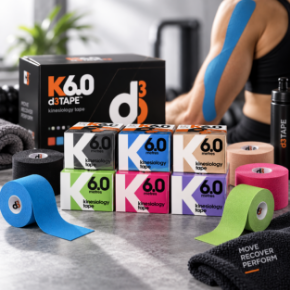
D3Tape K6.0 – 5 cm x 6 m
D3Tape K6.0 is an elastic kinesiology tape made from a cotton blend with an acrylic coating and is latex-free. The 50 mm x 6 m format is a versatile size for sport and professional use, allowing the required length to be cut according to the body area and taping technique.
This is the straightforward choice when you want a classic cotton-based kinesiology tape in a standard roll size. It can be considered for routine applications where flexibility, ease of cutting and a familiar textile construction are important.
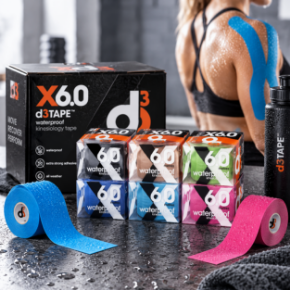
D3Tape X6.0 – synthetic waterproof kinesiology tape
For wet conditions, D3Tape X6.0 is the synthetic waterproof option in the D3 range. The manufacturer positions it for athletes training in wet environments and for water sports. Its 50 mm x 6 m dimensions remain close to the classic K6.0 format, but the material and moisture behaviour are different.
X6.0 is therefore worth comparing when swimming, outdoor training, perspiration or repeated contact with water is an important part of the intended use.
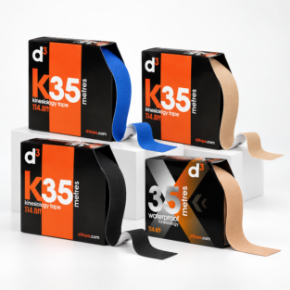
D3Tape K35 – 5 cm x 35 m professional roll
D3Tape K35 keeps the widely used 5 cm width but increases the roll length to 35 m. This format is practical for physiotherapy clinics, sports clubs, teams and professionals who use kinesiology tape frequently and prefer a larger roll rather than replacing standard rolls often.
The long roll also allows each strip to be cut to the exact length required for the chosen technique, making it useful where many different applications are performed during the week.
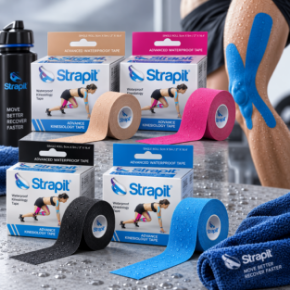
Strapit Advance – synthetic kinesiology tape for wet conditions
Strapit Advance KTape is a synthetic waterproof kinesiology tape designed for demanding activity and humid environments. Its synthetic viscose-and-spandex construction, adhesive system and water-resistant treatment distinguish it from traditional cotton kinesiology tape.
It is especially relevant to compare for water sports, obstacle races, training with heavy perspiration and other situations where durability in moisture matters. If water resistance is a priority, compare it directly with D3Tape X6.0 rather than choosing only by colour or packaging.
Cotton or synthetic kinesiology tape?
Cotton-based tape is the classic choice and offers a familiar textile feel. D3Tape K6.0 is an example of this construction. Synthetic waterproof tape is more focused on situations where water, sweat and humid conditions are important; D3Tape X6.0 and Strapit Advance are examples in this group.
Material should not be considered in isolation. Adhesive strength, skin sensitivity, friction from clothing or equipment, the body area and expected wearing conditions all matter. A stronger adhesive is not automatically the better option for every user.
When is kinesiology tape used?
Kinesiology tape is commonly seen in physiotherapy, sports medicine, athletic preparation and everyday physical activity. It can be integrated into taping techniques intended to preserve movement while providing sensory feedback over the area where it is applied.
Common body areas include the knee, shoulder, back, ankle, calf, thigh, elbow and wrist. The position of the tape and the amount of stretch should not be chosen only from a photograph found online. Persistent pain, significant swelling, trauma or restricted movement should be assessed by a doctor or qualified physiotherapist.
It is also useful to separate product characteristics from therapeutic promises. Elasticity, material, water resistance, roll size and adhesive construction are product characteristics that can be compared. The clinical effect of taping can vary with the condition and application technique, and kinesiology tape does not replace diagnosis, treatment or a rehabilitation programme recommended by a healthcare professional.
How to apply and remove kinesio tape
Apply tape to clean, dry skin without creams or oils. Rounding the corners can help reduce lifting at the edges. The amount of stretch depends on the taping method and should not be applied identically in every situation.
After application, monitor the skin. Remove the tape if strong itching, burning, persistent redness, blisters or increasing discomfort occurs. Do not apply over open wounds or irritated skin, and follow the individual manufacturer's instructions. Users with known sensitivity to adhesives should choose products carefully and seek professional advice when appropriate.
Frequently asked questions about kinesiology tape
Do “kinesiology tape” and “kinesio tape” mean the same thing?
In everyday retail use, both expressions are commonly used for the same general family of elastic taping products. Individual tapes can still differ significantly in material, adhesive, width, elasticity and resistance to water.
What is the difference between kinesio tape and rigid sports tape?
Kinesio tape is elastic and used where movement is intended to remain available. Rigid athletic tape is used in techniques focused more strongly on mechanical stabilisation or limiting selected movements. Choose according to the purpose of the taping method.
Which tape should I choose for water or heavy sweating?
Choose a product specifically designed for moisture. D3Tape X6.0 and Strapit Advance are synthetic options aimed at waterproof or highly water-resistant use, whereas D3Tape K6.0 is the classic cotton-blend option.
Which roll is practical for a clinic or sports team?
If tape is used frequently, a professional roll such as D3Tape K35 at 35 m can be more practical than repeatedly opening standard rolls. For occasional personal use, a 5–6 m roll is usually easier to manage.
Does the colour of kinesiology tape change its effect?
Choose based on material, adhesive, dimensions, moisture resistance and skin tolerance rather than assumed therapeutic properties of colour. Colour can be a personal preference, but it does not replace the technical characteristics of the tape.
Choose kinesiology tape according to the activity and environment
At Recosport you can compare kinesiology tape for sport, physiotherapy and rehabilitation from D3Tape and Strapit in standard, waterproof and professional-roll formats. For general individual use, start with a standard roll; for wet or high-sweat environments, compare synthetic waterproof options; for clinics and teams, longer professional rolls can be the more practical format.
If you are unsure which version is appropriate, compare the material, roll length, moisture resistance and expected conditions of use first. For medical advice or a taping technique tailored to a specific problem, consult a qualified healthcare professional.