
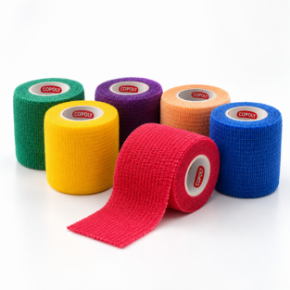
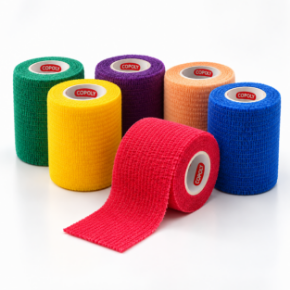
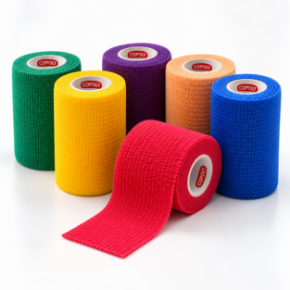
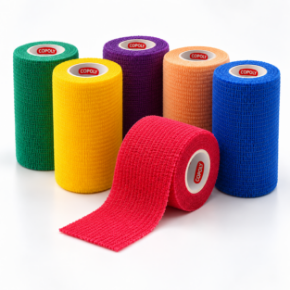
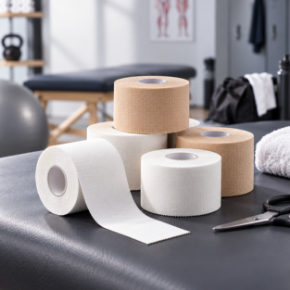
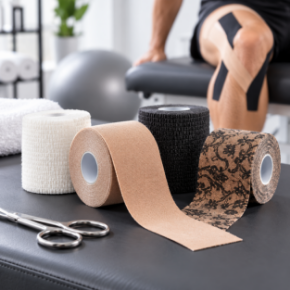
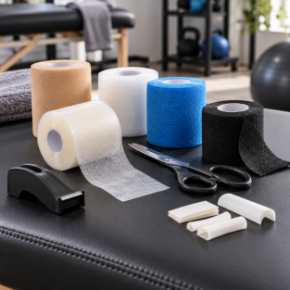
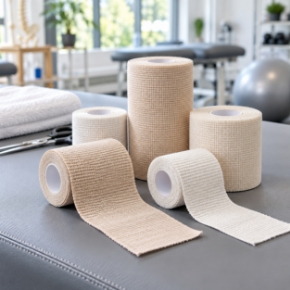












































A roll of kinesiology tape can look like a very simple accessory. Once you start comparing fabrics, adhesives, widths and applications, however, choosing one deserves a little attention. For an athlete, behaviour during activity matters. For a therapist, consistent material and the ability to adapt an application are important. For someone with sensitive skin, skin tolerance may be the deciding factor.
This guide to PINOTAPE kinesiology tapes explains the differences between ranges and helps you make an informed choice. It separates verifiable product features from therapeutic effects that should not be automatically promised. The right tape may be a practical accessory within a professionally guided programme, but it does not provide a diagnosis or replace recommended rehabilitation.
What is PINOTAPE kinesiology tape?
Kinesiology tape is an elastic textile tape with an adhesive layer, applied directly to the skin. Unlike a rigid sports strapping application, it is intended for applications that allow movement. PINOTAPE is PINO's taping range, with products differentiated by their backing material, adhesive and format. You may also encounter the terms kinesio tape, elastic therapeutic tape and kinesiology taping. [1][2]
Do not confuse elastic tape with an orthosis, compression bandage or rigid sports tape. These products have different roles. Tape that moves with the skin does not automatically provide the immobilisation or mechanical protection an injured joint may require. Knowing which type of product has actually been recommended is more useful than choosing by appearance.
When might it be useful, and is it necessary?
Taping can be discussed with a physiotherapist in relation to sport, an already assessed musculoskeletal complaint or a rehabilitation programme. The professional should establish a realistic purpose for the application and explain how its outcome will be assessed. An application that suited another person is not automatically appropriate for you: pain in the same area can have different causes.
Not every athlete needs kinesiology tape. When you exercise without problems, there is no reason to treat taping as an essential condition for a good training session. The choice should start with your own circumstances, rather than the fact that a well-known athlete wears colourful strips.
PINO acknowledges that the mechanisms and some effects attributed to taping do not have sufficient evidence for firm promises. Describing tape as a possible adjunct is therefore more appropriate than claiming it heals injuries. Do not assume it reliably prevents sprains, increases strength or accelerates recovery in every situation. [1][2]
Sport, Classic or Sensitive: the important differences
PINOTAPE Sport: rayon and strong adhesion
PINOTAPE Sport uses a rayon backing. Rayon is a regenerated cellulose fibre, sometimes called artificial silk; it is not natural silk. The manufacturer highlights a lightweight, water-repellent material and strong adhesion. These are practical characteristics for movement and perspiration, not evidence in themselves of a superior therapeutic effect. [1][5]
An example of the standard format is PINOTAPE Sport 5 cm × 5 m. Always check the full product label when comparing versions. Belonging to the Sport family does not mean that every special version has the same adhesive or stretch characteristics. Greater adhesion is not automatically the right choice for reactive skin.
PINOTAPE Classic: a cotton backing
PINOTAPE Classic uses a cotton backing and polyacrylate adhesive. PINO also explains that the previous Therapy name has been replaced by Classic, which is why older descriptions may use both names. Compare the exact product and its current specification rather than relying on familiar packaging alone. [2][6]
Classic is worth considering when a cotton backing is preferred. The useful question is not which range is strongest, but which combination of material and adhesive suits the intended application. The same person may reasonably choose differently for different body areas or activities.
PINOTAPE Sensitive: attention to skin tolerance
The Sensitive range uses a gentler adhesive intended for sensitive skin. There are rayon-backed versions as well as a Sensitive Classic version, so the word Sensitive does not guarantee one identical textile composition throughout the range. Check the specific model, such as PINOTAPE Sensitive or PINOTAPE Classic Sensitive Skin. [3][7]
Suitable for sensitive skin does not mean incapable of causing irritation. An unpleasant skin reaction is still possible with a mild adhesive. Read the instructions, monitor the skin and stop wearing the tape if itching, burning or redness develops. A history of adhesive allergy is a reason to seek professional advice before use. [3]
| Range | Textile backing | What to check before choosing |
|---|---|---|
| PINOTAPE Sport | Rayon | Strong adhesion; check skin tolerance. |
| PINOTAPE Classic | Cotton | Check the version and adhesive; Sensitive Classic also exists. |
| PINOTAPE Sensitive | Rayon or cotton, depending on the model | Milder adhesive; irritation remains possible. |
Choosing the width and length of a roll
Width is a question of coverage and adaptation, not a measure of treatment strength. A 5 cm width is a common reference format, while PINOTAPE XL and XXL offer widths of 7.5 cm and 10 cm respectively. PINOTAPE XL 7.5 cm × 5 m and PINOTAPE XXL 10 cm × 5 m illustrate the different amount of material available across the strip. [8]
A wider roll can be practical when the chosen technique calls for a larger piece. It does not mean covering as much skin as possible or building up layers. The shape, position and area should match the actual application, ideally following a professional demonstration.
For repeated use, 31 m PINOTAPE rolls provide more material in one format. PINOTAPE Sport 31 m may be convenient for organising clinic or team supplies. At the same width, 31 m is 6.2 times the length of a 5 m roll. That is a quantity comparison, not a savings guarantee: the actual cost per metre depends on the prices at the time of purchase.
Practical benefits you can compare objectively
One benefit of the range is having a choice. Material, adhesion and dimensions should not be treated as a single criterion. Compare the feel of the backing, the roll format and the wearing instructions separately, then choose a version that matches the recommendation you have received.
Another practical benefit is being able to cut the length needed for each application. A roll allows you to prepare suitable pieces instead of limiting you to one outline. Scissors designed for kinesiology tape can be a useful accessory for a neat cut. Preparing everything first makes the process easier to organise: measure, cut and check the shape before removing the protective paper.
Keep comfort separate from healing. An application that feels comfortable does not demonstrate that an injury has healed or that it is safe to increase training load. Assess progress using the criteria in your rehabilitation plan, not by how firmly the adhesive remains attached. [1][2]
Skin preparation and application: general principles
Read the instructions supplied with the product first. Your skin and hands should be clean, dry and free of oily residue. Do not apply tape over massage oil or cream. Do not cover irritated, damaged or wounded skin merely to continue an activity. Postoperative situations or significant skin changes need individual professional guidance. [2][3][9]
Measure the required piece and round its corners before application to reduce catching on clothing. Touch the adhesive as little as possible. Body position, direction and tape tension depend on the technique: there is no universal value suitable for the knee, shoulder and back alike. A material's maximum stretch is not a recommendation to stretch it as far as possible. [2]
After applying it, smooth the tape as instructed. For sport, PINO recommends applying tape approximately 30–60 minutes before exercise so the adhesive has time to settle before heavy perspiration begins. The specific roll's instructions and your therapist's advice take priority. [1]
For your first application to a painful area, an individual demonstration is more useful than copying a photograph. Ask how to apply the tape and which signs mean it should be removed. This article does not provide a personalised treatment pattern or prescribe a particular tension.
Wearing the tape, water and removal
Do not decide the wearing time solely by how long the adhesive lasts. The location, rubbing, perspiration, specific product and skin response all affect the experience. Follow the instructions rather than interpreting several days of possible adhesion as an obligation to leave the tape on until it falls away. [3]
The water-repellent nature of the Sport range is not a guarantee that every application will withstand every swimming session or repeated friction. Check the edges and your comfort after activity. Do not use intense heat to try to make lifting tape stick again.
Remove tape gently according to the instructions, rather than pulling it off sharply. Stop using it when irritation occurs and do not immediately cover the same area with another strip. New or worsening pain should not be concealed with a tighter application. Seek medical assessment for significant or persistent symptoms. [3]
Is Cross Tape the same as kinesiology tape?
No. Cross Tape consists of small grid-shaped patches, unlike elastic rolls cut into long strips. The manufacturer presents these patches for localised applications and offers several sizes. Choosing them should not be a matter of simply replacing a long strip with a small patch. [4]
Claims about energy flow or guaranteed pain relief should not be confused with demonstrated clinical benefits. The useful distinction in this guide concerns format, coverage and technique. Ask the professional which product they intend to use and the reason for that choice.
Common mistakes that can spoil an application
Choosing only by colour, applying to damp skin, excessive stretching and ignoring discomfort are easy mistakes to make. Buying a large roll before checking whether its material and adhesive are tolerated is another avoidable problem. For a first purchase, a clear specification is more valuable than the largest quantity.
Do not copy a technique simply because your pain seems to be in the same place. Do not add tape to push through pain during training. Taping should fit into a decision about activity rather than replace that decision. For a clinic or team, recording the version used and the person's feedback helps make future choices more consistent.
Frequently asked questions about PINOTAPE
Does the colour change the effect?
Do not attribute heating, cooling or healing effects to the colour. Compare the range, fabric, adhesive and dimensions. Two rolls of the same colour may belong to different families, and colour alone does not tell you whether a product is Sport, Classic or Sensitive.
Can I apply it without help?
You can learn a straightforward application from a professional demonstration and the product instructions. Unexplained pain, recent trauma or special medical circumstances should be assessed before taping. A general guide cannot establish the cause of symptoms or the correct tension for your situation.
Is stronger adhesive always better?
No. Adhesion is one criterion alongside comfort, skin tolerance and removal. Tape that stays firmly attached but causes irritation is not a suitable choice for that person. Look for the right balance for the planned application rather than the strongest possible hold.
Can I reuse a strip that has come off?
Do not treat removed tape as a reusable accessory or try to restore its adhesive with other substances. Use it according to the instructions. Check the skin before considering another application: having tape left on the roll does not mean the area is ready to be taped again.
How should I compare prices?
Start by comparing the same range and width, then divide the price by the roll length. With different widths, cost per linear metre does not represent the same quantity of material. Consider actual consumption too: a large roll is useful when you will use it, not simply because it contains more metres.
What information helps when asking for a recommendation?
Prepare the activity, application area, previous experience with adhesives and any format recommended by your therapist. For a commercial enquiry, specify the range, dimensions and quantity. These details are more helpful than asking for a very good tape without describing its intended purpose.
Choose carefully, then check the product details
A good PINOTAPE choice starts with three questions: what application is intended, what does your skin tolerate and which format is practical? Sport, Classic and Sensitive offer different options, while XL, XXL and longer rolls address coverage and consumption needs. There is no single mandatory model for everyone.
Read the product details and contact Recosport for current commercial information about versions and availability, which may differ between stores. Visit the Recosport blog for further informative articles. Product selection and clinical advice have different roles: one supports an informed purchase, while the other establishes whether and how taping is appropriate for you.
Sources and further reading
- PINO — PINOTAPE Sport
- PINO — PINOTAPE Classic
- PINO — PINOTAPE Sensitive
- PINO — Cross Tape
- PINO — PINOTAPE Sport blue
- PINO — PINOTAPE Classic beige
- PINO — PINOTAPE Sensitive black
- Recosport — PINOTAPE
- Dorset County Hospital, NHS — Medical Tape and Lymphoedema Management — General medical-tape precautions; this is not an efficacy study of PINOTAPE.